

Money Doesn’t Grow on Trees, But These 5 Economic Trees Can Help You Save Big
Money management is a crucial aspect of modern life, and the earlier one starts, the better. Parents often struggle to teach their kids about the importance of saving and investing, and it’s not uncommon to hear the phrase “money doesn’t grow on trees.” While that may be true, there are ways to grow your wealth by planting trees that offer long-term economic benefits.
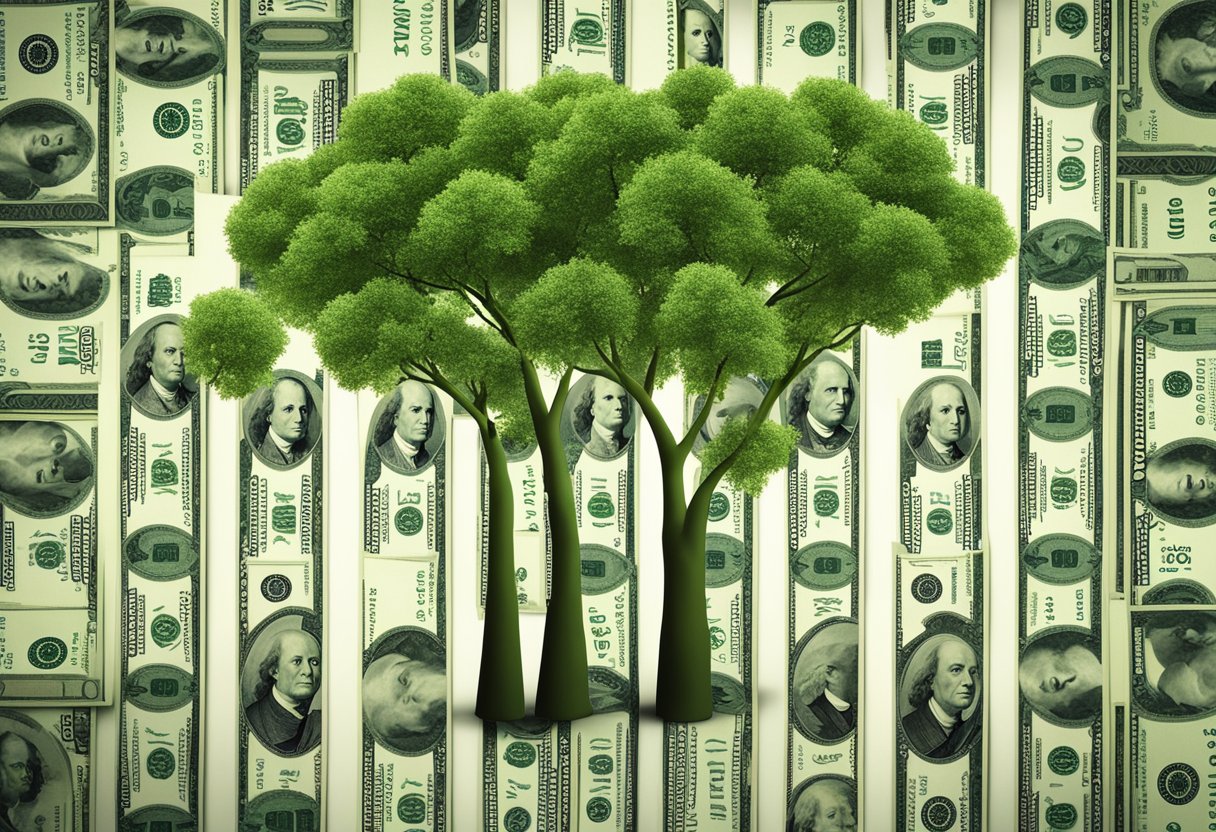
In this article, we’ll explore the top five economic trees that can help you save big. We’ll discuss the economical and health benefits of planting trees, the financial gains from arboreal investments, and innovative ways to make money with trees. Whether you’re a homeowner looking to enhance your property or an investor seeking profitable opportunities, this guide will provide valuable insights into the world of tree planting and management.
Key Takeaways
- Planting trees can provide long-term economic and health benefits.
- Arboreal investments can yield significant financial gains.
- Innovative ideas such as fruit-bearing trees and gardening can help combat hunger and save money.
Unveiling the Top 5 Economic Trees

Trees are not only a source of beauty and shade but can also be a source of economic benefits. This section will unveil the top 5 economic trees that can help you save big. These trees offer a range of benefits, from health advantages to financial growth potential and diverse money-making opportunities.
Tree 1: Economic and Health Advantages
The Moringa tree is a true powerhouse. It is a fast-growing, drought-resistant tree that can be grown in a variety of soils. Moringa leaves are rich in vitamins and minerals, and the tree’s seeds contain oil that can be used for cooking and skincare. Studies have shown that Moringa can help alleviate malnutrition, boost the immune system, and improve overall health.
Tree 2: Financial Growth Potential
The Teak tree is a high-value timber tree that is in high demand in the furniture industry. It is a slow-growing tree that can take up to 20 years to mature, but the financial rewards are significant. Teak trees can be grown as a long-term investment, and the wood can be sold for a high price.
Tree 3: Home Gardening Benefits

The Avocado tree is a popular tree for home gardening. Avocado trees are easy to grow and require minimal care. They produce delicious fruit that is high in healthy fats and nutrients. Avocado trees can also increase property value, making them a great addition to any home garden.
Tree 4: Combating Hunger
The Breadfruit tree is a staple food source in many tropical regions. The tree produces large, starchy fruit that can be cooked in a variety of ways. Breadfruit is a low-cost, high-yield crop that can help alleviate hunger in impoverished areas.
Tree 5: Diverse Money-Making Opportunities
The Bamboo tree is a versatile tree that can be used for a variety of purposes. Bamboo can be used for construction, furniture, and even clothing. It is a fast-growing tree that can be harvested every 3-5 years, making it a sustainable and profitable crop.
In conclusion, these top 5 economic trees offer a range of benefits, from health advantages to financial growth potential and diverse money-making opportunities. By planting these trees, individuals can save big and contribute to a sustainable and healthy future.
Economical Benefits of Planting Trees

Cost Savings and Environmental Impact
Planting trees can provide numerous cost savings for property owners. Trees can help reduce energy costs by providing shade during the summer months and acting as a windbreak during the winter months. According to the Arbor Day Foundation, “the net cooling effect of a young, healthy tree is equivalent to ten room-size air conditioners operating 20 hours a day.” This can result in significant savings on air conditioning costs, especially for larger properties.
In addition to cost savings, planting trees can also have a positive impact on the environment. Trees absorb carbon dioxide and other pollutants from the air, helping to reduce greenhouse gas emissions and improve air quality. They also help prevent soil erosion and filter rainwater, reducing the risk of flooding and improving water quality.
Boosting Property Values
Planting trees can also increase property values. According to a study by the University of Washington, “mature trees in a well-landscaped yard can add an average of 10 percent to a property’s value.” This increase in value can be especially beneficial for homeowners looking to sell their property in the future.
In addition to adding value to individual properties, planting trees can also have a positive impact on entire neighborhoods. A study by the University of Illinois found that “trees and landscaping in a community increase property values by as much as 15 percent.” This can result in increased tax revenue for local governments and a more attractive community for residents and visitors.
Overall, planting trees can provide numerous economical benefits for property owners and communities. From cost savings on energy bills to increased property values, trees can help save money and improve quality of life.
Health Benefits of Greenery

Greenery isn’t just visually appealing, it also has numerous health benefits that can help you feel better physically and mentally. Here are some of the ways that incorporating greenery into your life can help you improve your well-being.
Physical Health Improvements
Adding greenery to your environment can have a positive impact on your physical health. Plants release oxygen and absorb carbon dioxide, which can help improve air quality. This can be especially beneficial for those with respiratory issues such as asthma or allergies. In addition, studies have shown that exposure to greenery can reduce stress, lower blood pressure, and even improve sleep quality.
Mental Well-Being
Greenery can also have a positive impact on mental well-being. Studies have shown that exposure to nature can reduce symptoms of anxiety and depression. In addition, incorporating greenery into your environment can help improve your mood and increase feelings of happiness.
One study found that participants who spent time in a room with plants reported feeling less stressed and more relaxed than those who were in a room without plants. Another study found that patients recovering from surgery had lower stress levels and required less pain medication when their hospital rooms had plants.
Overall, incorporating greenery into your environment can have numerous health benefits. Whether it’s adding a few plants to your home or spending time in nature, there are many ways to incorporate greenery into your life and reap the benefits.
Financial Gains from Arboreal Investments

Trees can provide significant financial benefits to those who invest in them. While the returns may not be immediate, the long-term financial planning associated with trees can be quite lucrative. Additionally, there are several short-term earnings opportunities related to trees, such as selling timber or engaging in agroforestry.
Long-Term Financial Planning with Trees
Trees can be a valuable investment for those looking to plan for their financial future. By purchasing land and planting trees, individuals can create a source of passive income that can last for decades. Trees can be harvested for timber, which can be sold for a significant profit. Additionally, trees can increase the value of the land they are planted on, making it a more valuable asset.
Investing in trees requires a long-term outlook, as it can take several years for trees to mature to the point where they can be harvested. However, once the trees reach maturity, they can provide a steady source of income for years to come. This makes trees an attractive investment option for those looking to create a sustainable source of income.
Short-Term Earnings from Tree-Related Activities
In addition to the long-term financial benefits associated with trees, there are also several short-term earning opportunities related to trees. For example, individuals can engage in agroforestry, which involves planting trees alongside crops to create a more sustainable and diversified farming system. By selling both the crops and the timber from the trees, farmers can create a source of income that is both diverse and resilient.
Another short-term earning opportunity related to trees is selling timber. While this may not be a sustainable source of income, it can provide a significant boost to an individual’s finances in the short-term. However, it is important to note that selling timber can have negative environmental impacts if done irresponsibly.

In conclusion, investing in trees can provide significant financial benefits for those who are willing to take a long-term approach. By planting trees and engaging in agroforestry, individuals can create a sustainable source of income that can last for decades. Additionally, selling timber can provide a short-term boost to an individual’s finances. However, it is important to approach tree-related activities with caution and responsibility to ensure that the environmental impact is minimized.


